The continuity system of editing is a set of rules established in order to make sure that the audience remains aware of everything happening in the shot without any confusion. The five main editing techniques used are the; 180 degrees rule, shot/reverse shot, establishing and reestablishing shot, eye line match shot and the match on action.
-The 180 degrees rule is an invisible line that you should not cross when editing your shots, meaning that if you have one shot of two characters sitting at a desk you would not typically cut to a shot from the other side as this would be considered disorientating to the audience.
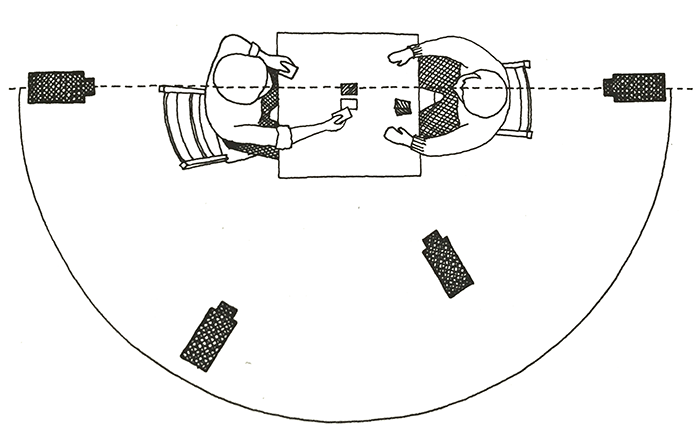
- Shot/reverse shot is a technique used primarily during conversation in film. This is when the shot will cut from facing on one thing, onto another and then often back to the original character or object. When shooting the first shot will be shot at an angle towards the first person/thing, the reverse of this shot is then shot from the opposite angle, maintaining on the same side to continue the 180 degree rule.
- An establishing shot typically uses a wide shot in order to establish the context and location of a scene in a film or TV show. In a film it can also establish the setting for the entire film, showing the audience relevant information needed throughout the film.

- The eyeline match cut uses the framing to enable the audience to see through the eyes of the character. This technique can bring the audience closer to the action showing emotion in more detail whilst also highlighting more important things in the scene, such as other characters and props with significance.
- Match cut on action plays a vital role in continuity in a piece of editing. Using a match cut on action ensures that the action remains continuous regardless that it is a different shot, this makes the action recognisable as one movement to the audience. Match cut on actions can also be used to trick the audience when used efficiently.

Now finished - well done. Very nearly a distinction.
ReplyDelete